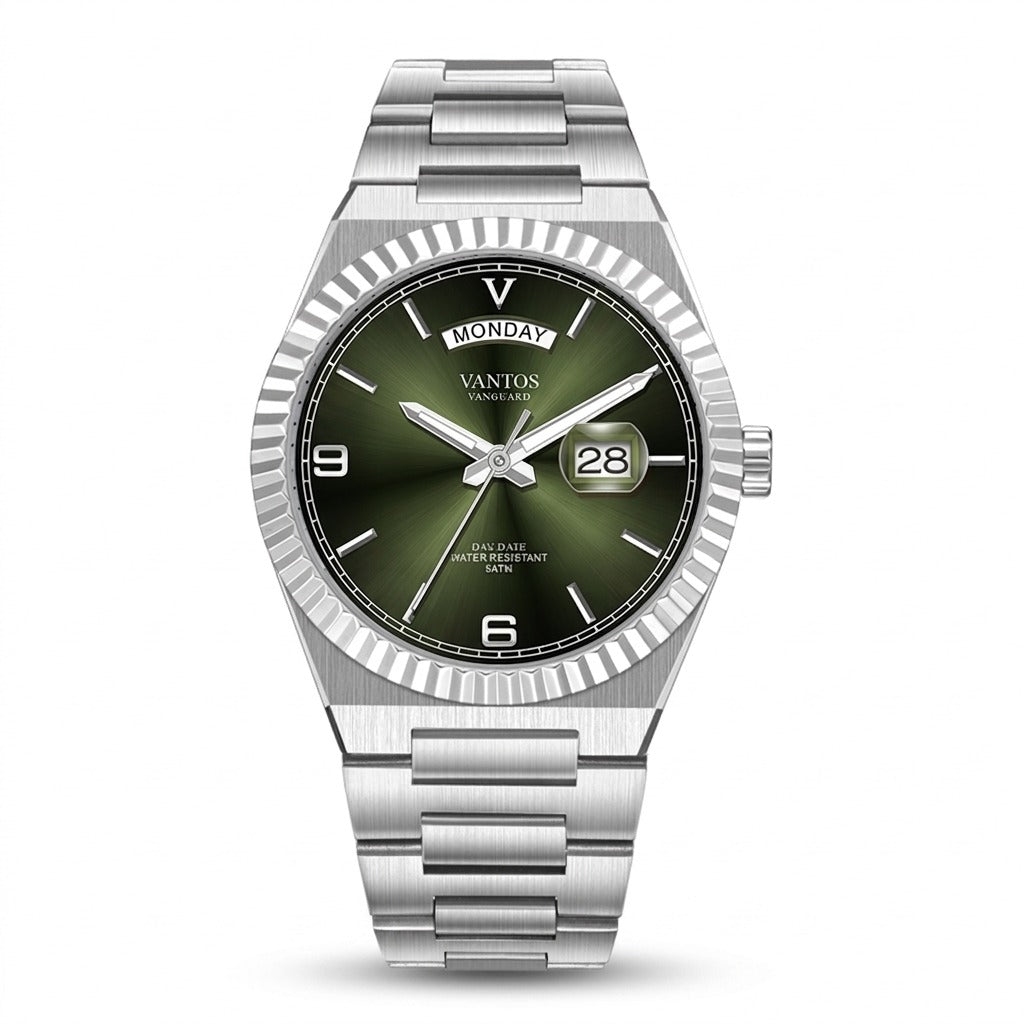
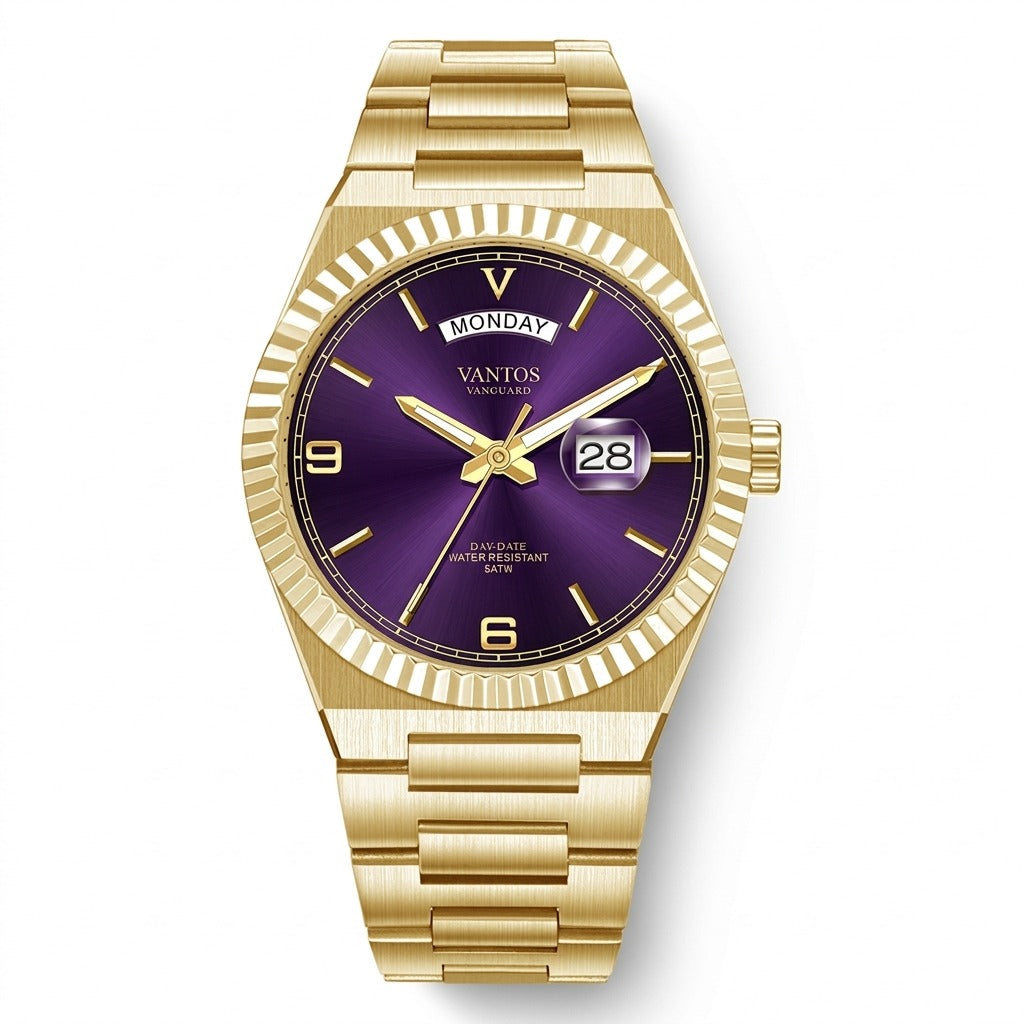
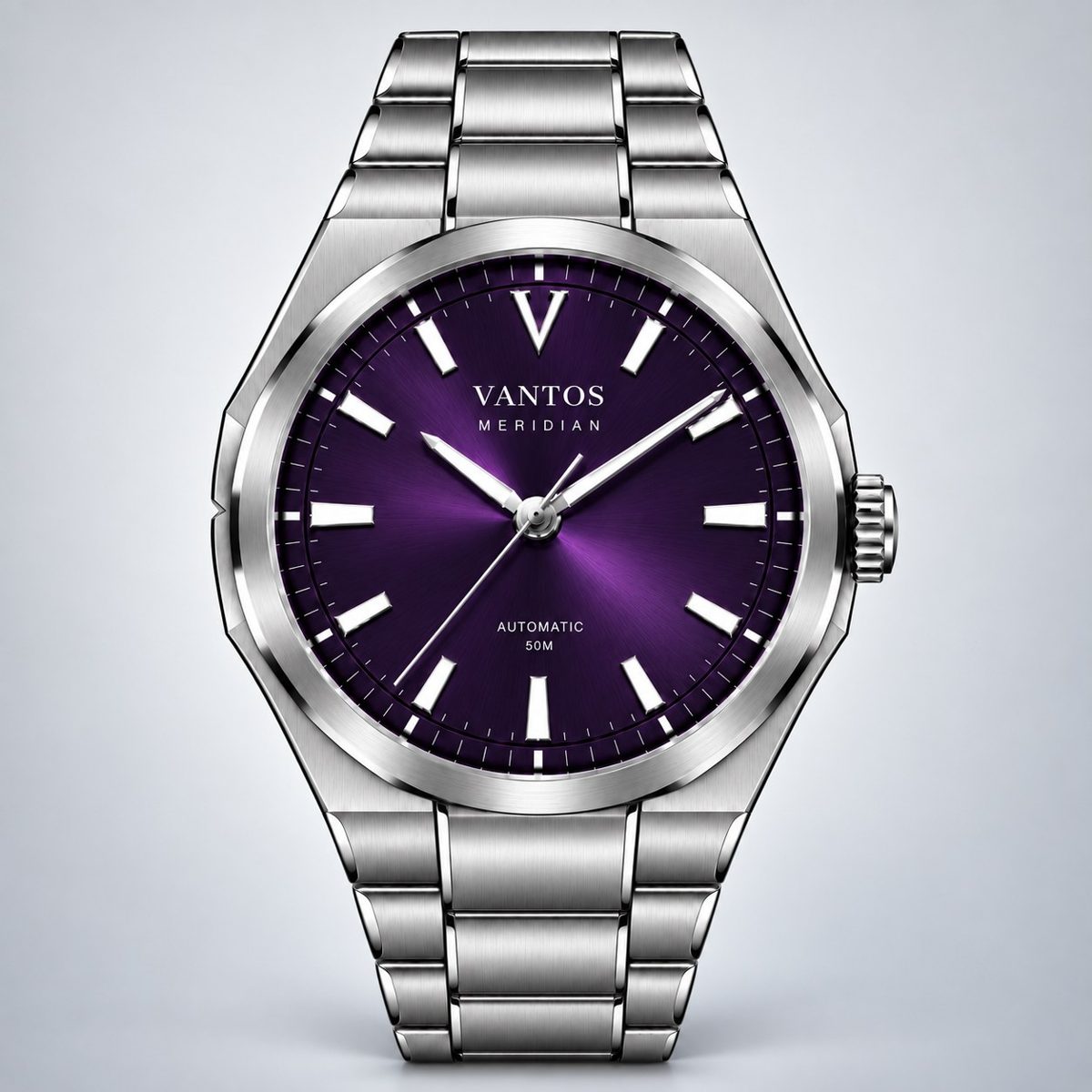
Made the long way round.
Every Vantos begins as a drawing. The tooling that makes it is cut for that design and nothing else, a sample is built and approved before any production starts, and every finished watch is inspected and pressure tested on its own.
Three lines, one watch.
The case, the dial and the bracelet are made separately, each on its own line, each signed off before it goes anywhere. They only meet once all three are right.
The case
- 1Engineering drawing
- 2Design confirmed
- 3Mould cut
- 4Drilled and polished
- 5Sample approved
- 6Production run
- 7Plated and inspected
The dial
- 1Designer drawing
- 2Design confirmed
- 3Mould cut
- 4Polished and coloured
- 5Sample approved
- 6Production run
- 7Inspected
The bracelet
- 1Shape confirmed
- 2Steel selected
- 3Links cut
- 4Drilled and polished
- 5Polishing checked
- 6Links assembled
- 7Plated and inspected
Then, together
Four materials, no substitutions.
Stainless steel
Cases and bracelets are cut from solid stainless steel. It takes a brushed finish cleanly, holds a polished edge, and gives a watch its weight.
Ion plating
Gold finishes are applied under vacuum — a titanium nitride base with a fine gold layer bonded over it. Harder than traditional plating, and it keeps its colour.
Hardened crystal
Sapphire-coated, so the glass shrugs off the marks a watch picks up against a desk, a doorframe or a sleeve.
Japanese movements
Chosen for accuracy and for how long they run between services. Named calibres, not unmarked modules.
Brushed, polished, bevelled.
Flat surfaces are brushed, edges are polished, and a cut bevel runs between the two. Three finishes on one piece of metal, each doing a different job — the brushing hides daily wear, the polish catches light, and the bevel makes the change between them read as deliberate. It is the slowest part of finishing a case and the first thing a hand notices.
Cut into the metal.
Case backs carry the model, the reference number and the specification. Crowns carry the V. Clasps carry the reference. All of it is cut into the steel rather than applied to it, so it is still legible long after the box has been thrown away.
It shows on the wrist.
Tooling made for one design gives a case its own shape. Approving a sample first means the colour is right on every watch, not most of them. Testing each piece individually means the one you get was checked, not the crate it came in. None of it is visible in a photograph. All of it is the difference between a watch you wear for a season and one you keep.